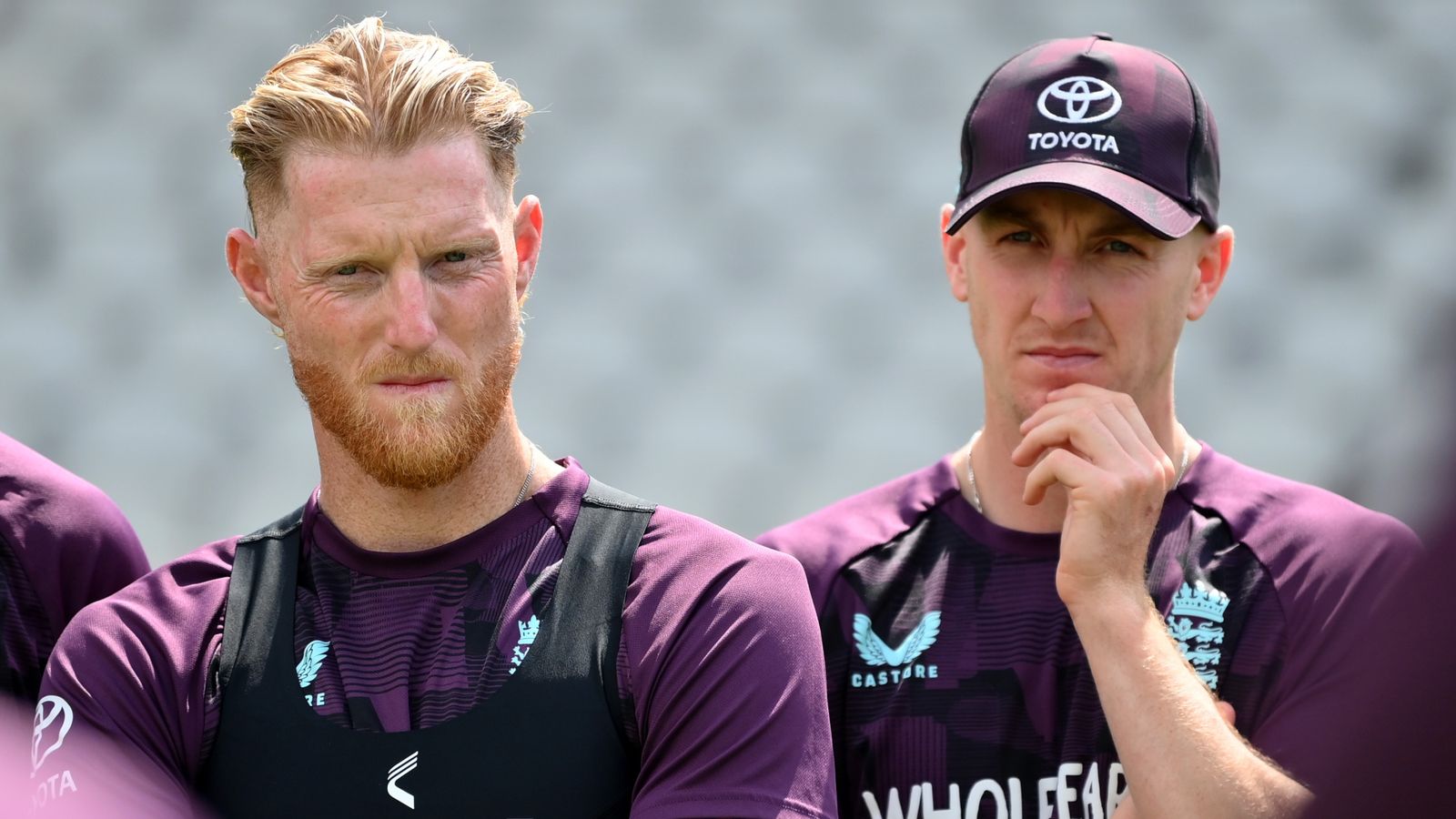
Nasser Hussain and Michael Atherton have delivered their verdict on England's cricketing summer - one that soared to generational highs and sank to schedule-induced lows.
England began their summer with an emphatic one-off Test victory over Zimbabwe in May. This was followed by successive ODI and T20 whitewashes of West Indies as the stage was set for a thrilling, drawn five-Test series against India.
Despite the momentum, England struggled to sustain the high standards that made the India series so memorable. They lost the ODI series to South Africa and drew a rain-affected T20 series against the Proteas.
Asked to rate England's summer, former captain Hussain told the SportNews Cricket podcast: "Seven out of 10, a B+.
"They were good against West Indies and Zimbabwe, but - as we're often reminded - when the bar is raised against top nations like India and Australia, England perform well but lack ruthlessness to seal the win.
"They could have been a bit more ruthless against India, maybe, but fair play to India, who did very well without their star players - some retired, injured, unavailable, or rested.
"England lost the 50-over series to South Africa and drew the T20 series, so, as I often saw on my own report card, it's a case of 'could do better' for England."
Atherton echoed the sentiment, expressing disappointment at England's inability to convert home advantage into a Test series win over India.
"The Test series was the showpiece event of the summer, bookended by those one-day games," he said. "The South Africa one-day games were unsatisfactory in several ways, especially due to scheduling.
"In the Test series, I was disappointed England didn't beat India. India played excellently and thoroughly deserved the draw, but I was still disappointed England didn't have enough to overcome them in home conditions."
From the heady heights of their gripping Test series against India, England's summer unravelled under the weight of a gruelling schedule.
The Hundred, the Vitality Blast and the County Championship were crammed alongside an ODI and T20 series against South Africa in a relentless seven-week window.
Quick turnarounds appeared to play a major role in England's seven-wicket drubbing by South Africa in the first ODI, which came just days after the conclusion of The Hundred, with the scheduling issues rippling across both the international and domestic game.
"It was such a dismal performance from England to start their 50-over campaign against South Africa," Atherton explained. "But the players - and it's not their fault - had just finished The Hundred final on Sunday.
"The ODI series started on Tuesday, so the five players involved in that final were up the motorway on Monday, meaning they had no time to practise. It was the culmination of a series of scheduling hiccups.
"The Metro Bank had its quarter-finals a week earlier, where Hampshire had earned a home tie but couldn't play at home because Southern Brave were using the Utilita Bowl.
"Middlesex were forced to host the match, but couldn't play at Lord's because it was being prepared for The Hundred final. The groundsmen had just 24 hours to get it ready.
"The scheduling at the start of the ODI series saw England simply turning up - and, unsurprisingly, caught cold on that opening day.
"On Blast Finals Day, a team like Lancashire was completely decimated - no Jos Buttler, no Phil Salt, no Luke Wood, overseas players gone. Five of the players who had got them to that stage weren't available.
"And they weren't the only team missing key players. Eventual winners Somerset were without Riley Meredith and Tom Banton. It's not ideal-you want your best teams competing in domestic finals. Having reached that point, it must have been disappointing for the players not to be involved.
"There are no easy solutions here. They're trying to squeeze too much cricket into three months, but something has to give."
The Professional Cricketers' Association called in July for "urgent schedule reform", saying that research had found that 83 per cent of players had expressed concerns about their physical wellbeing.
ECB chief Richard Johnson admitted in an interview with the BBC this month that the sport had to "look at the schedule" of an "unrelenting" calendar.
Hussain delivered his own strong verdict.
"The schedule is a joke," he said. "There's no other way of putting it - it's an absolute joke and everyone knows it. What's the solution? I couldn't give you one, other than to make cricketing decisions.
"Yes, financial decisions have to be made. Everyone wants their piece of the pie - The Hundred, the County Championship, The Blast - and they all want the best players. But there's collateral damage.
"In the end, you have to prioritise cricket. I don't know how anyone can justify five Tests in seven weeks, followed by The Hundred the very next day, and then two days later the 50-over series begins - all while expecting international players to participate in everything.
"I don't know how anyone can sit there and not realise that's too much for the players. Going straight from a draining Test series into The Hundred, and then straight into the 50-over format.
"Something's got to give - either England will have to rest players, or those players will underperform."